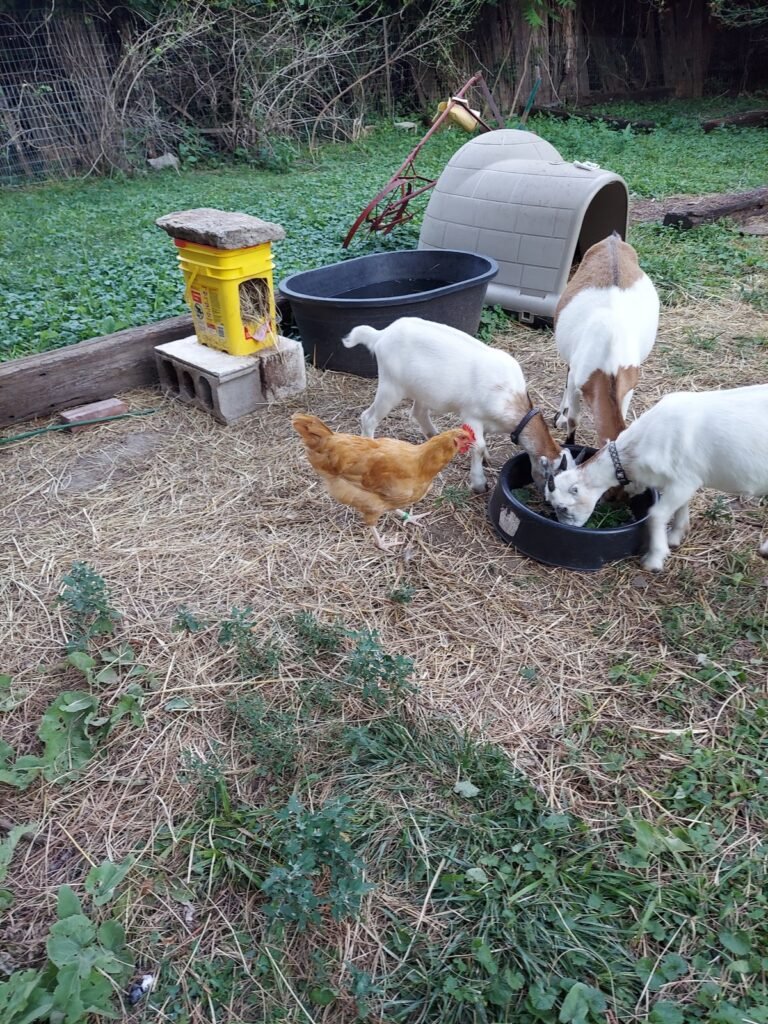
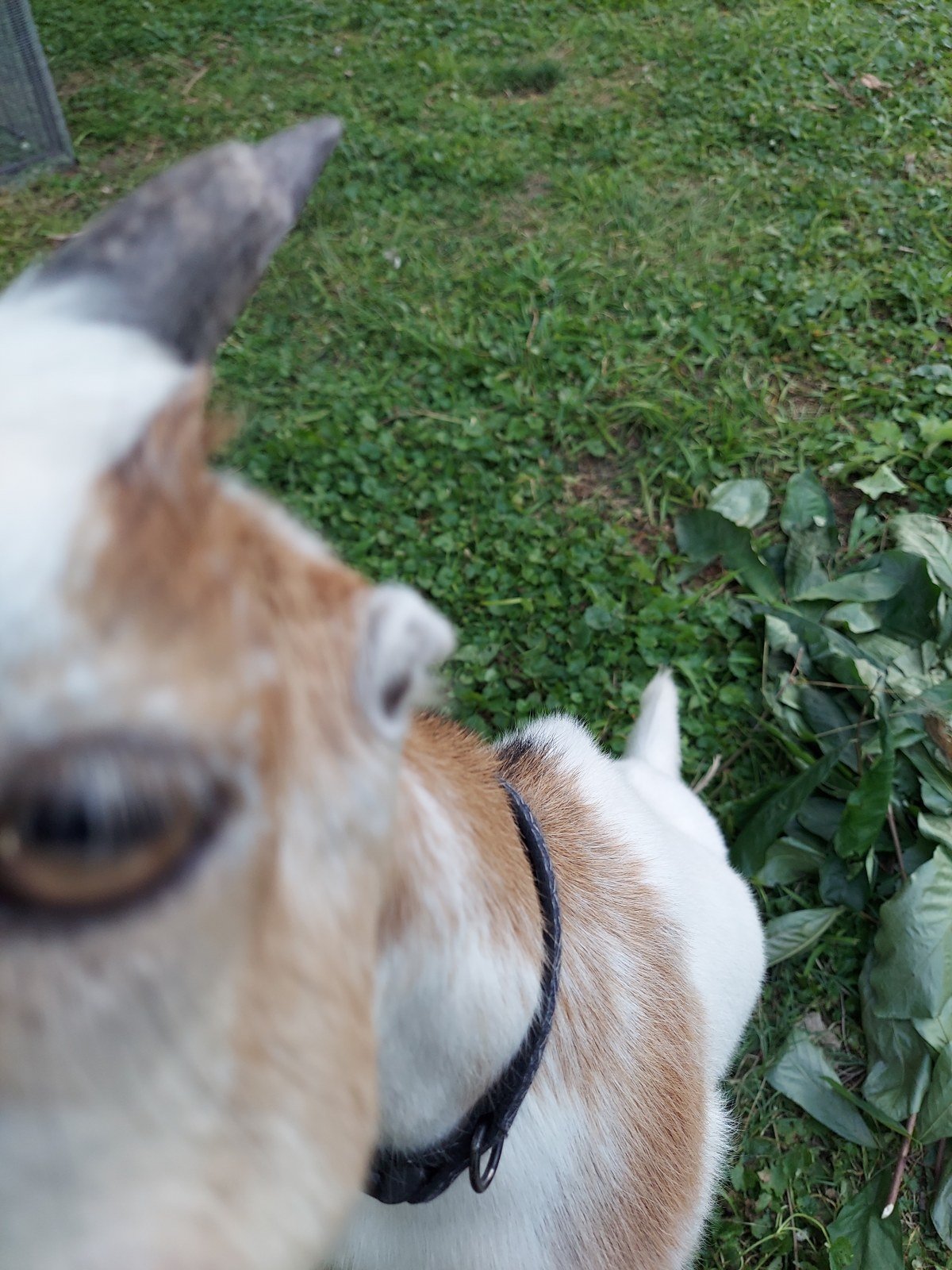
If you’ve seen one of our goat photos and wondered where her ears went, you’re not alone. From 2022 until 2025, our herd here at Golden T Cross Farm was Mini LaMancha. They’ve all gone on to great new homes now, but they taught me a lot. Here’s a little Mini LaMancha goats history, a look at the breed, and a few of the characters.
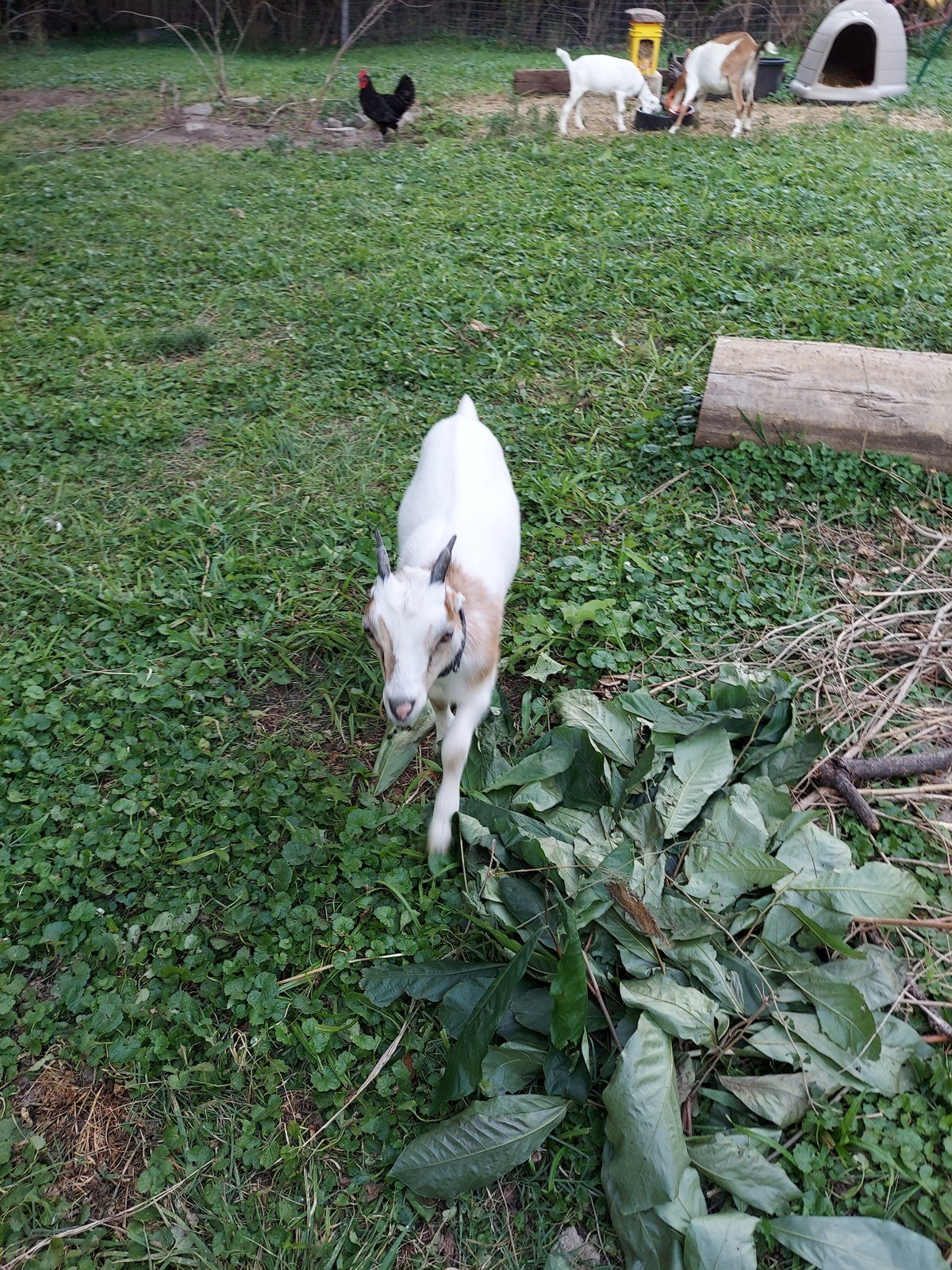
Mini LaMancha Goats History: Where the Ears Came From
To understand the mini, you start with the full-size LaMancha. The American LaMancha Club says its breed has about the foggiest background of any popular dairy goat. Short-eared goats came to California with Spanish missionaries, and people called them “cuties,” “monas,” and “monkeys.” The club’s history also tells of a crate of short-eared goats sent to a world’s fair exhibit, marked “LaMancha, Cordoba, Spain.” The name stuck.
The breed itself was built in the U.S. In 1937, Eula Fay Frey bought a California dairy that came with two short-eared goats, bred their line with other dairy breeds, and later moved her herd to Oregon. The American LaMancha was accepted for registry on January 27, 1958, with about 200 goats taken in as original stock. The first true LaMancha on the books was Fay’s Ernie, L-1. The American Dairy Goat Association’s breed standard calls it a sturdy goat with excellent dairy temperament that can take a lot of hardship and still produce.
The mini came later. Miniature dairy goats started as crosses between a standard dairy breed and a Nigerian Dwarf, aiming for a goat halfway between the two in size, with Nigerian traits like high butterfat. The Miniature Dairy Goat Association, formed in 1996, registers kids out of a registered standard dairy goat and a registered purebred Nigerian Dwarf. The Miniature Goat Registry (TMGR) says later generations can reach purebred status at the sixth generation if they meet the breed standard. So a “purebred” mini takes a while. Like most things worth having.
What Is a Mini LaMancha?
A Mini LaMancha is a cross between a standard LaMancha and a Nigerian Dwarf. You get LaMancha dairy traits in a smaller, easier to handle package.
- The ears: People sometimes call them an earless breed. They do have ears, but they’re so small they’re hard to see until you’re up close. Gopher ears are tiny, about an inch at most, with little or no cartilage. Elf ears are a bit bigger, with a little cartilage and a tip. ADGA allows elf ears up to about 2 inches on a standard LaMancha, and TMGR’s Mini LaMancha standard caps them at 1.5 inches. Only gopher ears are allowed on registered American or Purebred bucks.
- Size: Smaller than a standard dairy goat. TMGR’s standard puts the ideal height at 24 to 26 inches for does and 24 to 28 for bucks, and mature milking does average 90 to 120 pounds.
- Temperament: Usually calm, friendly, and curious. Curious is the key word. Mine thought everything was better than what was right in front of them, and they loved to nibble on tarps.
- Milk: Less volume than a full-size dairy goat. The milk is rich and usually higher in butterfat than the standard breeds, which makes it great for cheese and cream.
A Few Faces From Our Old Herd
I’ve introduced a few of ours on X over the years. Moon Pie was our cutie of a doeling in spring 2024. That summer I introduced Bucko, then a 4-month-old buckling. Freya was one of my does, and in June 2024 she got herself in a pickle.
In March 2025, Freya had quads, which is a lot of kids for one little doe. Kidding season is a mix of joy and worry, and every goat keeper learns that.
They kept me on my toes, too. One Friday in September 2024, 3 wethers, a buckling, and one of my does all got out. Goats will be goats.
Why They Fit a Small Homestead
Mini LaManchas don’t take up much room, which is a big reason I chose them. I milked my goats, and the wethers went in the freezer. With meat prices so high, that mattered.
A few care tips if you’re thinking about them:
- Never keep one goat alone. Goats are herd animals, and a lonely goat is a loud, unhappy goat. Plan on at least two.
- Keep the water drinkable. Goats drink less when water is ice cold, so offer warm water in winter and check buckets twice a day.
- Learn FAMACHA. Checking eyelids for anemia helps you catch parasite trouble early. Some days I checked my goats’ eyelids more than my phone.
- Be ready for kidding. Have powdered colostrum, gloves, iodine for umbilicals, and lots of clean, dry towels. You can’t have too many.
Want to know how the herd started? Read how Golden T Cross Farm started with a goat rescue, which involves a van and more goats than I planned on. You can also see how the breeds compare on our goats page.
Have a question about Mini LaManchas, or thinking about adding a couple to your place? Send it my way, and follow along on X at @jcibme for more from Golden T Cross Farm.