Raising backyard turkeys taught us a lot here on our urban homestead in Topeka, Kansas. We don’t have turkeys on the farm right now, but over the years we’ve raised Broad Breasted Whites, Bronzes, and Royal Palms. Each one taught us something. Here’s how they compare, and what we’d tell anyone thinking about raising turkeys.
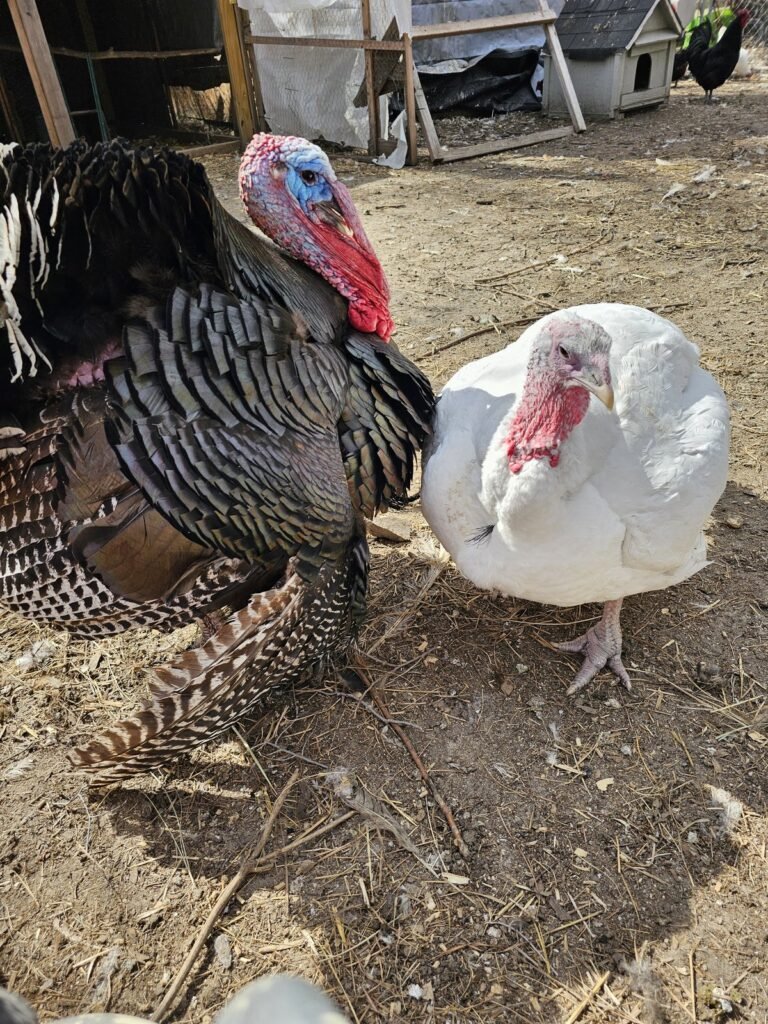
Table Birds
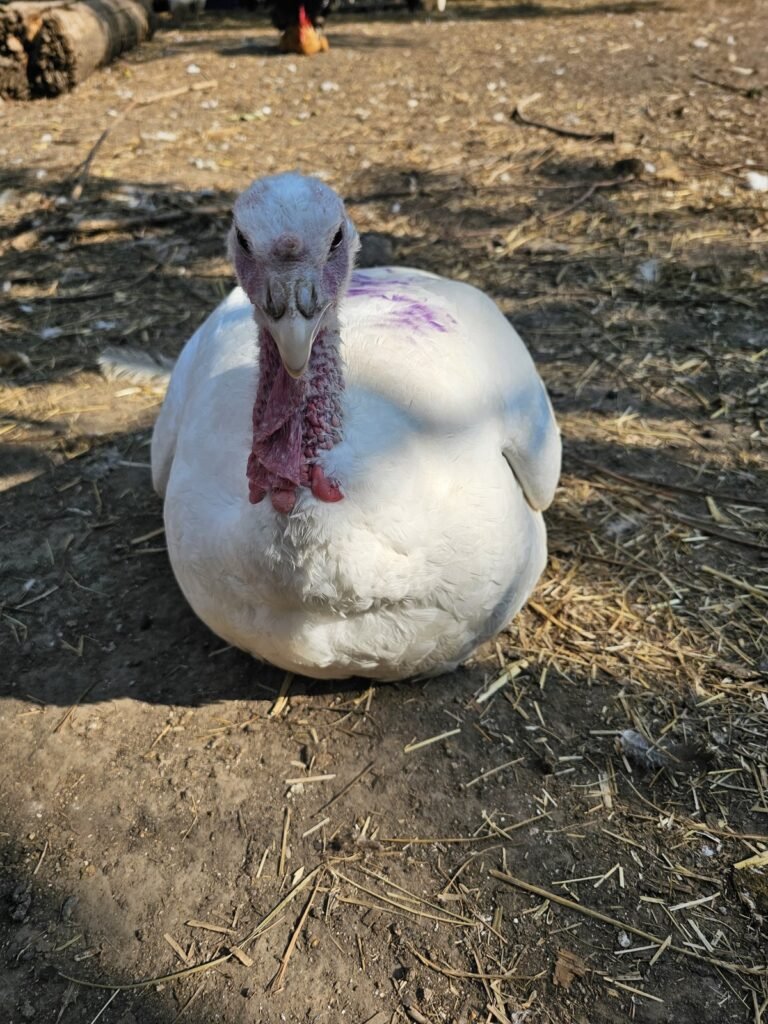
- Broad Breasted White: This is the classic Thanksgiving turkey. They grow fast and put on a lot of breast meat, and most are ready to butcher at about 16 to 20 weeks. They get so heavy they can’t mate on their own, and if you keep them too long, their legs and hearts can struggle.
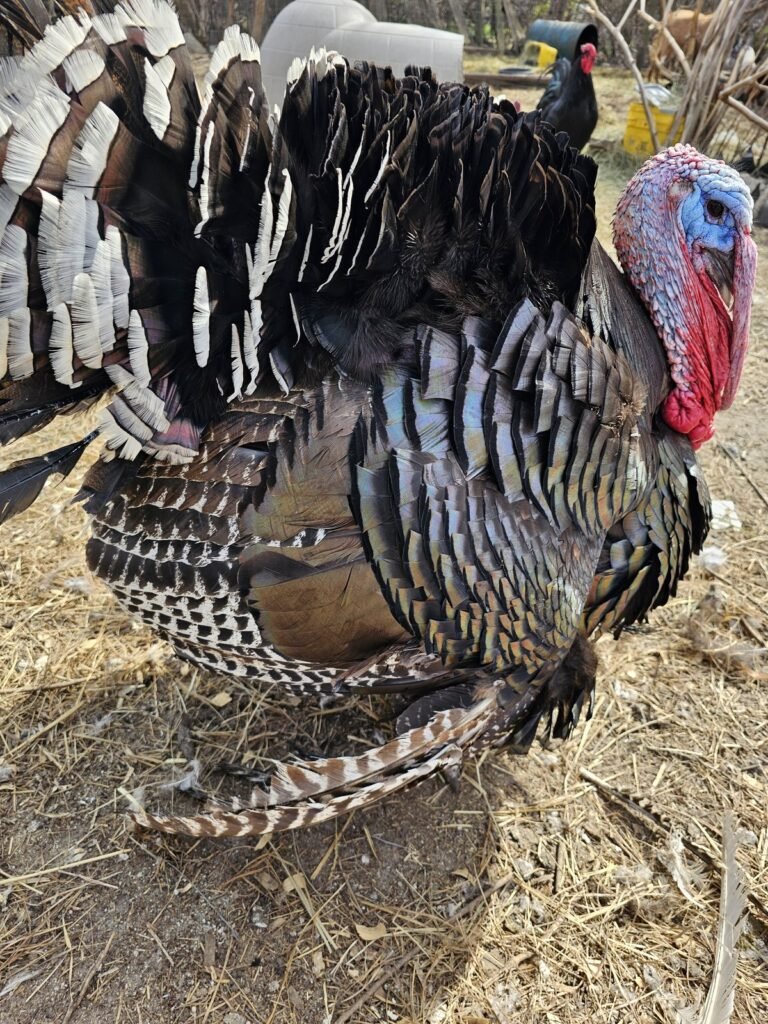
- Bronze: Beautiful copper and bronze feathers with a lot of shine. The Broad Breasted Bronze is a big table bird much like the White. The Standard Bronze is a heritage bird that grows slower but can raise its own young.
Heritage Birds
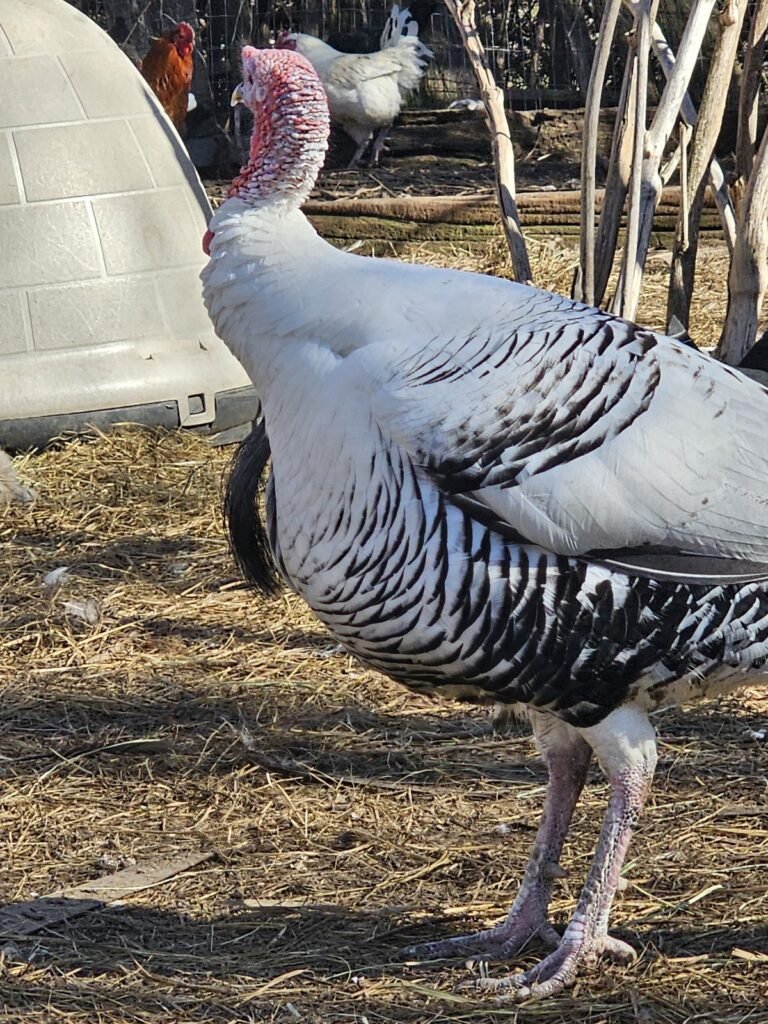
- Royal Palm: Striking white and black feathers, and a much smaller bird, often about 10 to 12 pounds for hens and about 16 to 22 for toms. They’re great foragers, they help with bugs, and they can breed naturally. They can also fly, so plan your fencing. Oklahoma State University’s breeds guide notes they were bred more for looks and exhibition than for the table, and calls them a great fit for small family farms.
If you’re new to raising backyard turkeys, decide early whether you want a table bird or a heritage bird. It changes everything from feed to fencing.
Getting Poults Off to a Good Start
Baby turkeys, called poults, are fussier than chicks for the first few weeks. Here’s what the University of New Hampshire Extension guide to raising turkeys recommends:
- Start the brooder at 100°F with no drafts, and check it with a thermometer on the floor at bird level. Drop the heat about five degrees each week. Poults may need heat until about six weeks old.
- A red infrared bulb keeps them warm without keeping them awake. Always leave room for them to move away from the heat.
- Use wood shavings for bedding. Skip sawdust, which poults may eat instead of their feed, and newspaper, which is slippery and can cause splay legs.
- Feed a turkey starter, not chick starter. The bug that causes coccidiosis in turkeys is a different species than the one in chickens.
- Never leave open buckets of water on the floor. Poults are curious and can jump in and drown.
UNH also says most turkeys reach mature size in about six months, with toms eating nearly 100 pounds of feed each and hens nearly 60. And check your local zoning rules before you bring any birds home.
Keeping Turkeys and Chickens Apart
We keep our Golden Cross chickens too, so this one matters to us. Penn State Extension explains that turkeys are highly susceptible to blackhead, a fatal disease of the liver and ceca. Chickens handle it much better but can carry the cecal worm that spreads it. There are no approved medications in the U.S. to prevent or treat blackhead, so the best protection is keeping turkeys away from chicken ground and droppings. UNH suggests doing turkey chores before chicken chores each day.
What We Learned Raising Backyard Turkeys
- Poults need steady warmth and can be slow to find food and water. Dip their beaks to show them where it is.
- Keep turkeys apart from chickens if you can. Chickens can carry blackhead disease, which is much harder on turkeys.
- Decide early whether you want a table bird or a heritage bird. It changes everything from feed to fencing.
- Turkeys are curious and full of personality, and many will follow you around the yard.
Thinking about raising backyard turkeys? Ask us on X at @jcibme.