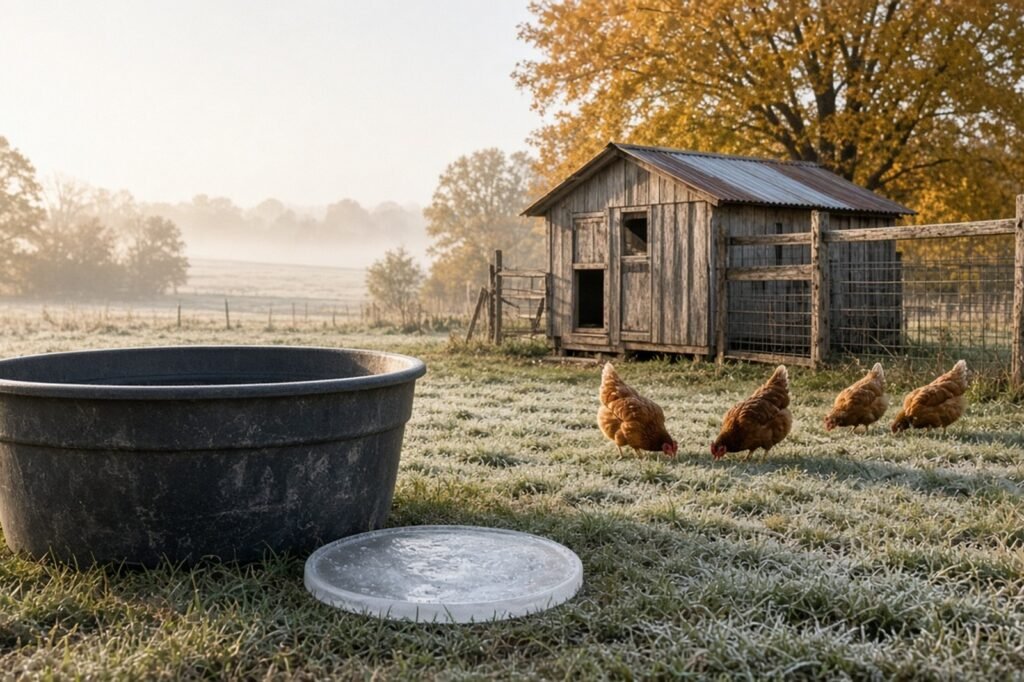
Welcome to the very first post in the Golden T Cross Farm News section! Life on a Kansas fall homestead is busy. The days get shorter, the frost warnings start showing up on my phone, and the animals let you know the season is changing. Here’s what’s been on my mind in the barn and the coop lately.
Picking the Right Breed
Every breed choice is a trade-off. On the goat side, here’s what I weighed back when I had goats:
- Nigerian Dwarf vs Nubian: Nubians give about twice the milk per lactation. Nigerian Dwarf milk averages a little over 6% butterfat, and some does run as high as 10%. It is great for cheese, from a goat about half the weight of a Nubian. Nubians are also known for loud voices.
- Alpine vs Nigerian Dwarf: Alpines put out about a gallon a day. Nigerians give less, but richer. Volume or cream?
- Boer vs Kiko for meat: Boers grow faster, but in one Southeast study Boer does had far more lameness and parasite problems each year than Kikos. Fewer hoof and worm headaches add up.
And for the chickens:
- Leghorn vs Buff Orpington: Leghorns can lay about 280 white eggs a year but run flighty and loud. Buff Orpingtons lay about 180 to 250, stay calm, and handle cold winters well.
- Australorp vs Rhode Island Red: Both are hardy, cold tolerant layers that are good for beginners, often about 250 brown eggs a year. Australorps tend to be gentler and go broody. Reds handle rough conditions, but some roosters get pushy.
Keeping an Eye on Goat Health
When I had goats, one going off feed overnight always got my attention. A few fall warning signs I watched for:
- Coughing or wheezing: Damp barns and dust can lead to pneumonia. Take her temperature (normal is about 101.5 to 103.5°F), open up the airflow, and call your vet if she’s off feed.
- Hunched and grinding teeth: That’s pain. Check her temperature and her rumen, and call your vet before it turns into an emergency.
- Swollen tight on the left side: That’s bloat, and it can kill fast. Call your vet, keep her walking, and lock that feed room.
- A buck straining to pee: This can be urinary stones and it’s an emergency, so call a vet fast. Keep the calcium to phosphorus ratio around 2 to 1 in his feed.
Speaking of bucks, back when we kept goats, fall meant buck season. Anyone who’s kept one knows you can smell him before you see him. Enough said.
Molting Hens and Frost Prep
Right now my hens look like they lost a fight with a leaf blower, and the egg basket is nearly empty. If your girls quit laying in October, shorter days and molting are normal. Keep the protein up and give them time before you blame the feed.
K-State Research and Extension’s guide to molting and feather loss in small poultry flocks says a fall molt is natural and nothing to panic over. Hens usually come back laying at a higher rate, with better quality eggs. If you’d rather keep them laying, the rule of thumb is natural daylight plus artificial light equal to the longest day of the year, which is about 16 hours in Kansas. A cheap timer handles that. Just know that egg quality and production slowly drop off in a flock that never gets to molt, so a little vacation isn’t the worst thing.
When Frost Hits a Kansas Fall Homestead
The National Weather Service office in Topeka keeps frost records going back to 1888. The average first fall frost in Topeka lands on October 19. The earliest on record came September 22, 1995, and the latest held off until November 21, 1944. So by mid-October I check the forecast like it owes me money.
K-State says the average first frost comes in mid-October across most of central and eastern Kansas. Northwest Kansas can see it several weeks earlier, and southeast Kansas several weeks later. A few things to do now:
- Pick the green tomatoes. Wrap them in newspaper in a cool, dark spot and they’ll ripen over a few weeks.
- Switch to rubber water tubs. Flip a frozen one and the ice pops right out, no hammer needed.
- Keep the water open. Virginia Cooperative Extension lists a lack of fresh water as a common reason hens stop laying, especially in the coldest months when it freezes. Check it morning and evening.
- Protect the feed. Mice chew right through plastic bins, so use metal cans with tight lids.
If you want to see what the barn looked like in the goat years, here’s a look back at our Mini LaManchas. You can also meet the hens doing all this molting on our chickens page. They’d prefer you didn’t take pictures right now.
I’d love to hear from you. What breed is in your pasture or coop, and would you raise it again? What do you protect first when the forecast drops below freezing? Send me your questions, and come follow along on X at @jcibme for more from Golden T Cross Farm.